Gemini 4 Is Coming: What Google's Announcement Actually Means

Gemini 4 Is Coming: What Google's Announcement Actually Means
In late September 2026, Google DeepMind's leadership publicly confirmed that Gemini 4 is coming "as soon as possible" — notable partly because the company appears to be skipping a planned Gemini 3.5 Pro release to get there. For anyone tracking the AI model race as a student, developer, or working professional, this is a good moment to separate the signal from the noise.
This post covers what's actually been confirmed, why labs sometimes skip a version number, and — more usefully — how to follow model releases like this without letting them derail your learning.
What's actually been said
Google's statement is a timeline signal, not a spec sheet. Leadership has said the next generation model is in post-training and is a priority to ship quickly, but concrete details — release date, benchmark numbers, pricing, context window — have not been published. Treat any specific claim you see beyond "it's coming, and coming soon" with skepticism until it appears on Google's own blog or developer documentation.
This matters because the gap between "a lab says a model is coming" and "the model ships with real capabilities you can build on" is often weeks or months, and early leaks/rumors are frequently wrong on specifics.
Why labs skip version numbers
Skipping an intermediate release (in this case, apparently going from Gemini 3.x directly toward Gemini 4 rather than shipping a 3.5 Pro first) usually reflects one of a few things:
- Consolidation — the lab decides a planned intermediate update isn't differentiated enough to justify a separate release, and rolls its improvements into the next major version instead.
- Competitive timing — labs are watching each other closely. If a competitor's release changes the calculus, a company may reprioritize its roadmap to ship its next big model sooner rather than an incremental one.
- Internal readiness — sometimes the bigger model is simply ready ahead of schedule, making the smaller intermediate release redundant.
This is a normal part of how frontier labs operate now, not a sign of trouble. Anthropic, OpenAI, and Google have all reshuffled release plans before based on internal progress and market conditions.
How this differs from Gemini 3.8 Live
It's worth being precise here, because these are two different things. Gemini 4 is Google's next major model generation — not yet released, timeline unconfirmed beyond "soon." Separately, Google already shipped Gemini 3.8 Live and 3.8 Live Extended Thinking in recent weeks, which are real-time and deeper-reasoning variants of the current Gemini 3.8 model family, available today. We cover that shipped update in detail in our explainer on Gemini 3.8 Live and Extended Thinking — don't confuse the two when you're reading other coverage.
Practical advice: track the race without chasing every headline
If you're learning AI or building products on top of these models, here's a framework that keeps you productive instead of anxious:
1. Separate "announced" from "available." Only change your plans, curriculum, or product roadmap based on models you can actually access via an API or product today. Announcements are useful context, not action items.
2. Build on stable fundamentals, not specific model quirks. Skills like structured prompt engineering, evaluation, and retrieval design transfer across Gemini, Claude, and GPT-family models. A new Gemini version won't make those skills obsolete.
3. Revisit your model choice quarterly, not daily. For most learners and small teams, checking in on the state of the model landscape every few months is enough. Daily tracking of every lab's announcement is a time sink with diminishing returns — see our take on the current flurry of near-simultaneous releases for why this pace is now the norm, not an exception.
4. When Gemini 4 does ship, evaluate it against your actual use case. Benchmark leaderboards are a starting point, not a decision. Test it on the specific tasks — coding, summarization, agentic workflows — that matter for your work, the same way you'd evaluate any new tool alongside options like Python-based AI coding assistants.
What to watch for when Gemini 4 does launch
When Google does publish real details, the things worth paying attention to are: context window size, pricing per token, tool-use/agentic benchmarks (not just general knowledge scores), and availability in the API versus consumer products first. Those are the factors that actually determine whether it's useful for a project you're building, versus a factor that only matters for marketing comparisons.
What to do in the meantime
Waiting for Gemini 4 shouldn't mean pausing your learning or product plans. A few concrete things worth doing now, regardless of when it ships:
- Document what you'd actually want tested. If you have a specific use case, write down the two or three things that matter most for your workflow (accuracy on a particular task type, latency, cost per request) so you can evaluate Gemini 4 quickly and objectively against your own bar, rather than reacting to marketing claims when it launches.
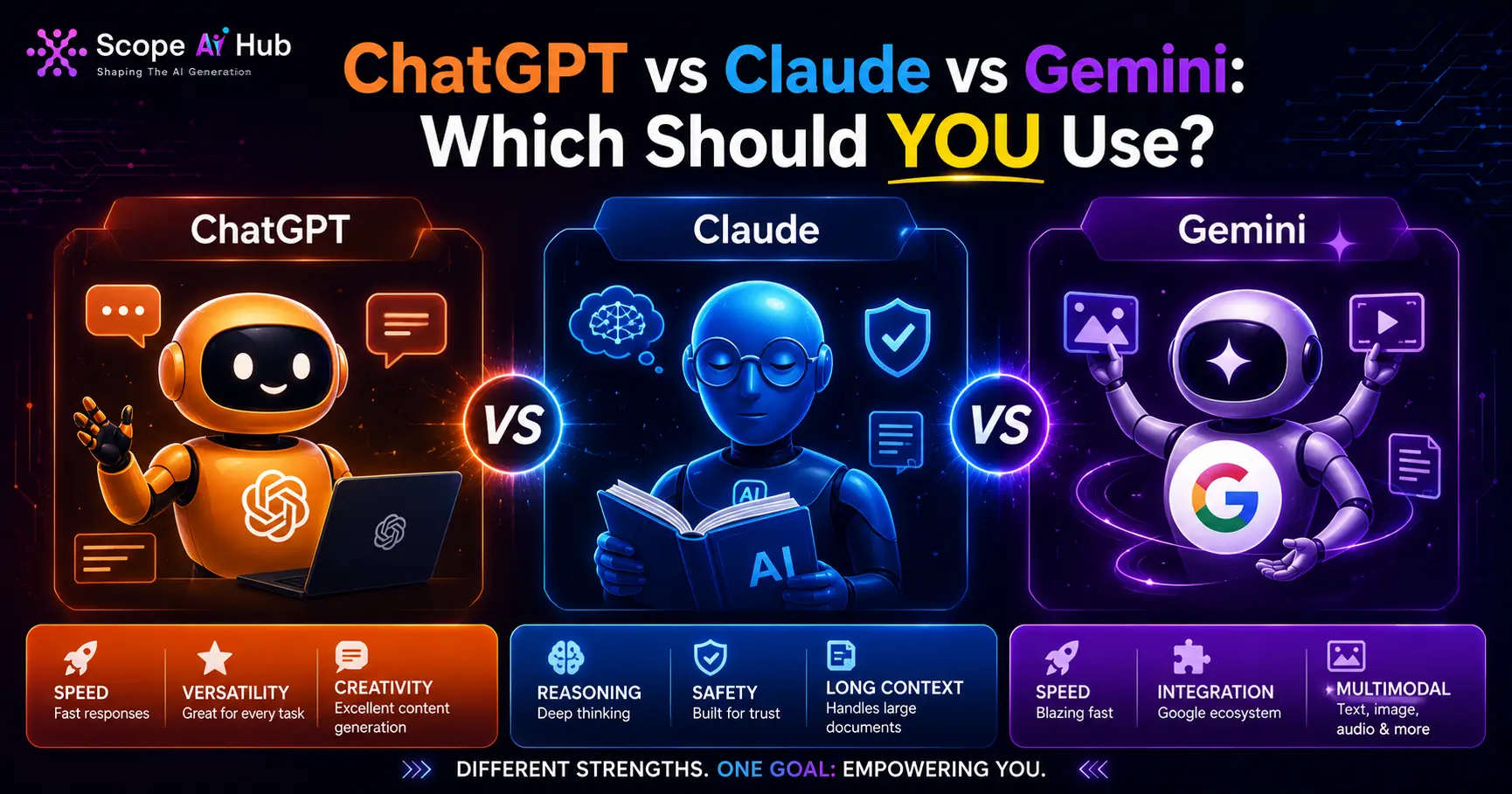
- Keep building on what's available. Gemini 3.8 and its Live/Extended Thinking variants, along with models from Anthropic and OpenAI, are fully capable of supporting real projects today. There's no reason to shelve a project waiting for a model that isn't out yet.
- Watch for the announcement channels that matter. Google's own developer blog and API documentation are the reliable sources for confirmed details — not social media speculation or leaked benchmark screenshots, which are frequently inaccurate or taken out of context ahead of a real launch.
This pattern — a lab teasing a major release while shipping smaller, real updates in the meantime — is common enough that it's worth building the habit of separating the two in your own mental model of the AI landscape.
Frequently Asked Questions
When will Gemini 4 actually be released? Google has not given a specific date, only saying it is coming "as soon as possible." Treat any specific date you see elsewhere as speculation until Google confirms it officially.
Why did Google skip Gemini 3.5 Pro? Google hasn't given a detailed public explanation, but skipping intermediate versions to focus resources on a bigger next-generation release is a common pattern among frontier AI labs.
Is Gemini 3.8 Live the same as Gemini 4? No. Gemini 3.8 Live and 3.8 Live Extended Thinking are already-shipped variants of the current Gemini 3.8 model family. Gemini 4 is an unreleased, next-generation model.
Should I wait for Gemini 4 before learning AI tools? No. The fundamentals of prompting, tool use, and evaluation you learn today transfer directly to whichever model you use next. Waiting for the "next big thing" is a common way to delay actually building skills.
Build skills that outlast any single model release
The model race will keep moving — the skills that matter are the ones that work across Gemini, Claude, and every future release. Scope AI Hub's Generative AI & Prompt Engineering course teaches exactly those transferable fundamentals. Browse our courses or contact us to get started.
Scope AI Hub
Verified PublisherAI Education & Research Team
Scope AI Hub is Chennai's leading AI training institute, delivering industry-driven, hands-on AI education since 2019. Our expert team covers Generative AI, Machine Learning, NLP, Data Science, and MLOps.
Ready to Start Your AI Journey?
Join thousands of students who transformed their careers with hands-on AI training at Scope AI Hub.